
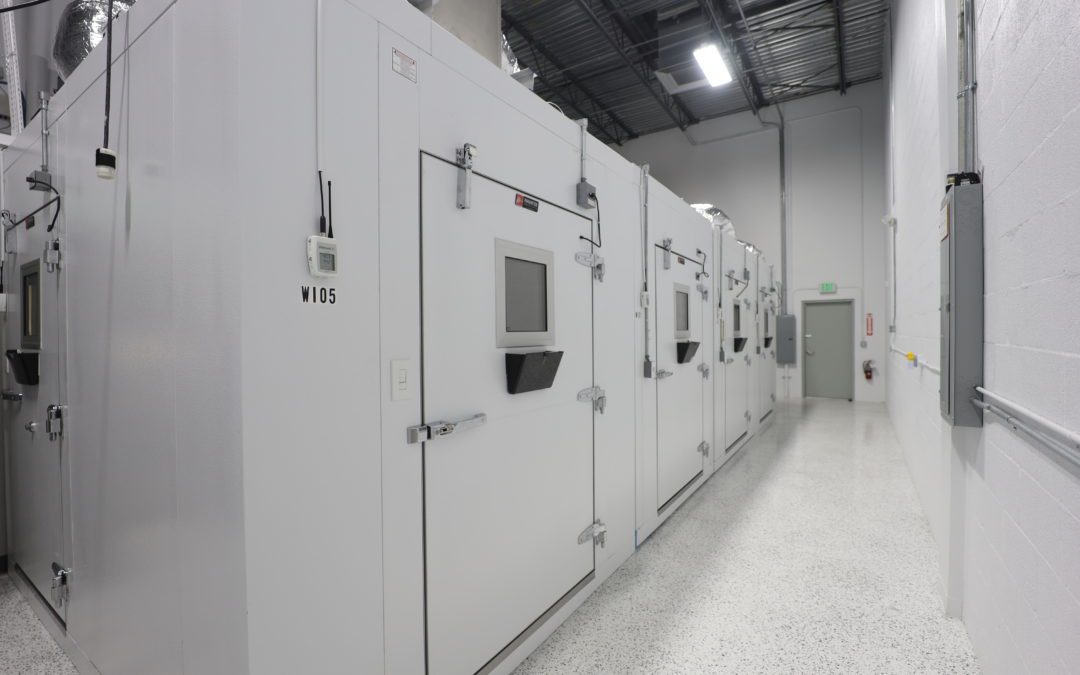
Whether it’s testing athletic apparel in simulated climates, preserving priceless historical documents, or helping develop life-saving pharmaceuticals, walk-in environmental chambers are used in more ways than most people realize. We sat down with Mike Bromer, Sales Manager at Parameter Generation & Control, a BINDER Company, to discuss some of the most interesting projects he’s encountered throughout his career. With extensive experience designing custom walk-in environmental rooms, stability rooms, and other precision-controlled environments for industries ranging from pharmaceuticals and paper testing to research and manufacturing, Mike shares real-world insights into the unique applications, engineering challenges, and innovative solutions that make every project different.
Walk-in Environmental Chamber Q&A with Mike Bromer
What are some unusual applications you’ve seen a conditioner and/or walk-in environmental room used for?
One unusual application is a botanical garden that uses a conditioner to maintain the ideal temperature and humidity for plant displays. Museums also use our conditioners to preserve historical documents on display and in archival storage rooms. Another unique application was an athletic apparel manufacturer that installed treadmills in our environmental rooms, allowing athletes to test materials under a variety of climate conditions that simulate different regions of the world.
Which industry has surprised you the most in terms of needing precise temperature and humidity control?
The paper and packaging industry has been one of the most surprising. Precise temperature and humidity control are essential for evaluating how paper products perform and maintain their quality under different environmental conditions. Another unexpected application is equipment testing, where manufacturers use environmental rooms to test products such as deep freezers, commercial heat pumps, and ice makers to ensure they operate reliably across a wide range of temperatures and humidity levels.
Can you share a memorable custom room project that required a particularly unique design or configuration?
One memorable custom project was a medical device company’s ventilator test chamber. The room had to accommodate highly variable heat loads and included a specialized emergency vent system. In the event of a power outage, the ventilators would continue operating and could overheat, so automated hatches and vents were designed to open if the chamber temperature exceeded a certain threshold.
Another unique project was a custom environmental chamber for a research hospital, designed to support studies on how diseases are transmitted between subjects under carefully controlled environmental conditions.
What are some products customers are testing that most people would never guess require stability or shelf-life testing?
So many everyday products undergo stability and/or shelf-life testing, even though most people never think about it. Some great examples include toothpaste, mouthwash, lotions and creams, mascara, eye shadow, household cleaning products, paint, and batteries. Environmental chambers help manufacturers evaluate how these products perform over time and under different temperature and humidity conditions, ensuring they remain safe, effective, and reliable throughout their intended shelf life.
Have you seen any emerging industries or technologies creating new demand for environmental control rooms?
Yes. One of the fastest-growing areas is semiconductor manufacturing, which requires extremely precise temperature and humidity control to ensure product quality and process reliability. We’re also seeing increased demand from the pharmaceutical industry as new drug therapies and biologics often require controlled environments, including refrigerated storage at approximately 5°C, to maintain their stability and effectiveness.
When customers first contact you, what challenges are they usually trying to solve?
Customers typically contact us because they need a more reliable and precise testing solution. Their current equipment may lack the accuracy they require or have difficulty consistently maintaining the desired conditions. Many customers are also looking to bring testing in-house to reduce the costs and delays associated with outsourcing. Others are experiencing significant growth and need additional testing or controlled storage capacity to support increased production, new product development, or regulatory requirements.
Are there any common misconceptions people have about stability rooms or environmental chambers?
A common misconception is that stability chambers and environmental chambers are completely different types of products. In reality, the distinction is often based on industry terminology. Stability chambers are typically associated with pharmaceutical stability testing, while environmental chambers are used across a wide range of industries for environmental simulation and product testing. At their core, they both control temperature and humidity to create precise, repeatable conditions used for testing or storage. Another misconception is that all chambers perform the same, when differences in performance, reliability, compliance, and long-term value can have a significant impact on a client’s operation.
Can you think of a project where customer testing requirements pushed us to develop an especially innovative solution?
Yes. We worked with a life sciences company that needed to test multiple freezers under different temperature and relative humidity conditions to understand how they would perform when shipped and operated in different parts of the world.
The challenge was that 8–12 freezers operating inside the chamber generated a significant amount of heat. To manage that variable heat load, we developed a chilled-water preconditioning coil, along with specialized ducting and a ceiling design to help control airflow within the chamber. It was a great example of how the customer’s testing requirements drove us to develop a customized solution rather than relying on a standard chamber design.
Looking back over your time with Parameter Generation & Control, what customer application or project stands out as the most interesting or unexpected?
One project that stands out involved an animal pharmaceutical company that created a highly controlled laboratory environment for breeding live ticks. Those ticks were then used to test and refine different formulations of flea and tick medications that eventually become the treatments our pets receive from their veterinarians. It was an interesting application because it highlighted how precise environmental control is essential to developing safe and effective animal health products.
Can you share a memorable customer project? Whether it involved an innovative application, a unique product being tested or stored, or a complex challenge that required a customized solution, what made this project stand out?
One project that really stands out to me was with a major medical products manufacturer that supplies IV solutions to hospitals across the U.S. Their facility was severely impacted when a levee breached during Hurricane Helene, leaving portions of the facility under several feet of water and mud.
I visited the facility after they began their phased reopening and had cleared the area where our cold rooms would be installed. Having experienced the impact of Helene firsthand, this project was especially meaningful to me. Knowing that the equipment we were providing could help them restore operations and get critical medical supplies back to patients made this project particularly rewarding.
About Mike Bromer, Sales Manager at Parameter Generation & Control
 Mike is an trusted environmental control solutions specialist at Parameter Generation & Control, a BINDER Company, where he partners with industry leaders to create precision-controlled environments for critical testing, storage, and stability applications. Serving industries including pharmaceutical, TAPPI and paper testing, textiles, agriculture, product testing, and research, he works closely with each client to develop solutions that meet demanding regulatory, operational, and performance requirements.
Mike’s primary focus is on walk-in stability rooms, environmental rooms, and custom-engineered controlled environments. He is particularly experienced with projects that require more than an off-the-shelf solution, working through unique application requirements, specialized storage configurations, demanding temperature and humidity specifications, redundancy strategies, facility limitations, and regulatory compliance considerations to deliver precisely tailored environmental solutions.
Drawing on Parameter’s nearly 50 years of engineering expertise and proprietary Two Temperature Method control technology, Mike collaborates with customers from concept through implementation to ensure every solution delivers the precision, reliability, and consistency their application demands. He is dedicated to delivering custom-engineered solutions for applications with demanding environmental requirements.
Outside of his professional role, Mike is an avid reader of non-fiction and history, enjoys outdoor activities such as disc golf and hiking, and has a keen interest in board games and live music.